10 Certifications That Lead to Skilled Trade Jobs
Ranked by how directly each credential gets you onto a job site, plus how long each takes, how often it renews, and who issues the card.
By Nadia Hassan · Oct 15, 2026 · 13 min read
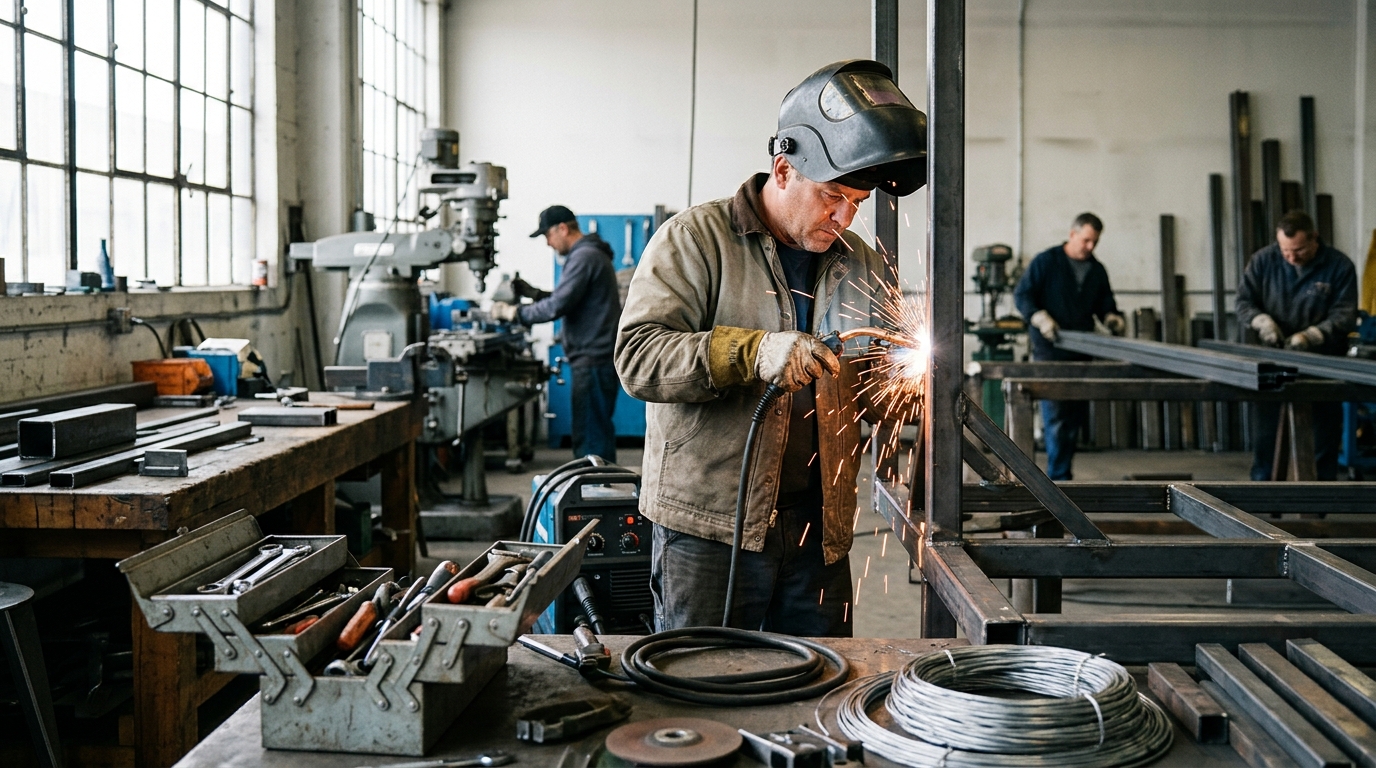
The certifications that actually lead to skilled trade jobs are the ones a regulator, an insurer or a site supervisor insists on before you touch the work: OSHA outreach cards, EPA Section 608, a welding performance qualification, a CDL, equipment operator credentials, and craft credentials such as NCCER, ASE and NATE. None of them replace hands-on hours or an apprenticeship, but each one removes a specific reason to pass over your application.
This guide ranks ten by how directly they unlock paid work, with rough time ranges, renewal cycles, and how to put each one on a resume. Licensing for electricians, plumbers and HVAC contractors is separate and set by your state — check your state licensing board before you spend money on anything.
How we chose this list
The ranking criterion is simple: how directly the credential turns into permission to do paid work, and how portable that permission is between employers and states.
Three tests decide the order.
- Is it required? Some work is legally or contractually closed to you without the card. You cannot buy or handle regulated refrigerants without EPA Section 608. You cannot drive a commercial vehicle over the weight threshold without a CDL. Many general contractors and owner-controlled sites will not badge you in without an OSHA outreach card.
- Is it portable? A credential issued by a national body travels with you. An in-house qualification issued by one employer usually does not, and a welding performance qualification is tied to the procedure and the employer that signed it.
- Can you earn it before you have years of hours? Credentials you can earn in weeks sit higher than credentials that require documented experience first, because they are what gets you hired in the first place.
What goes wrong, honestly. Cards are gates, not skills. A hiring manager who watches you fail a weld test or back a trailer badly will not care what is in your wallet. Online-only providers sell outreach cards and "certifications" that no one in your trade recognises, so ask a working journeyman or a union training coordinator which issuer they accept before you pay. Most of these credentials expire or require continuity paperwork, and a lapsed card is worth nothing on badge-in day. Finally, no certification sets your pay. Pay in the trades is driven by the local labor market, whether the job is union or open shop, the scale in a collective bargaining agreement, shift differentials and overtime, and your documented hours. Check the BLS Occupational Outlook Handbook for national and state occupational data, your state apprenticeship agency for apprentice wage progressions, and local employers for current rates.
The list at a glance
| # | Certification | How to build it | Rough time |
|---|---|---|---|
| 1 | OSHA 10- or 30-Hour Outreach (Construction or General Industry) | Take the outreach course from an OSHA-authorized trainer, in person or through an authorized online provider | 10 or 30 contact hours, spread over 2 days to 2 weeks |
| 2 | EPA Section 608 Technician Certification | Study the refrigerant handling material, then sit the proctored exam through an EPA-approved certifying organization | 1–4 weeks of study, exam in one sitting |
| 3 | Commercial Driver's License (Class A or B) with endorsements | Complete Entry-Level Driver Training with a registered provider, pass the state knowledge and skills tests | 3–8 weeks full time, longer part time |
| 4 | Welding performance qualification (AWS-based) | Build bench hours on coupons, then test to a specific procedure at a certified test facility | 3–9 months of practice, test in one day |
| 5 | NCCER Core plus a craft level | Enrol in an NCCER-accredited training program at a community college, apprenticeship or employer | 1–2 terms per level |
| 6 | Powered Industrial Truck (forklift) operator certification | Complete formal instruction plus a hands-on evaluation by a qualified evaluator | 4–8 hours, usually one day |
| 7 | NCCCO mobile or tower crane operator certification | Prepare with an operator training program, pass written and practical exams | 2–8 weeks prep, depending on seat time |
| 8 | ASE certification (automotive or medium/heavy truck) | Pass the specialty tests and document the required hands-on experience | Exams any time; experience requirement is typically 2 years |
| 9 | NATE certification (HVAC/R) | Pass the core exam plus a specialty exam after real installation or service experience | 4–12 weeks of study per exam |
| 10 | EPA Lead Renovator (RRP) certification | Take the accredited 8-hour initial course for renovators | 1 day, refresher every few years |
Each item in detail
1. OSHA 10- or 30-Hour Outreach Training
This is a voluntary safety awareness course, not a license, but it has become the default badge-in requirement on large commercial and industrial sites, and some states require it for certain public work. Take the 10-hour if you are new; take the 30-hour if you want to supervise or run a crew.
How to build it:
- Choose Construction or General Industry based on the work you want.
- Book with an OSHA-authorized trainer — a community college, a union training center, or an online provider listed as authorized. Ask the provider for the trainer's authorization before paying.
- Complete 10 or 30 contact hours and keep the plastic card; replacements are slow.
Resume line
OSHA 30-Hour Construction Outreach — completed [Month Year], card no. [number].
2. EPA Section 608 Technician Certification
Federal rules require this before you handle, recover or purchase regulated refrigerants. Type I covers small appliances, Type II high-pressure systems, Type III low-pressure, and Universal covers all three. Get Universal if you can; it costs little more and closes no doors.
How to build it:
- Study the core and type-specific material — most people spend 10–30 hours over one to four weeks.
- Book a proctored exam with an EPA-approved certifying organization, often at a supply house or trade school.
- Sit all four sections in one session.
It does not expire, so put the date and type on your resume and bring the card to an interview.
Resume line
EPA Section 608 Universal Technician Certification — [Month Year], [certifying organization].
3. Commercial Driver's License (Class A or B)
A CDL is a state-issued license, not a certification, but it is the single most transferable credential on this list. It opens heavy haul, concrete, utility line work, crane support, dump and vac truck work, and it makes you useful on a crew long before you are fully skilled in the trade.
How to build it:
- Confirm requirements with your state DMV or driver licensing agency — age limits for interstate driving, medical certification and endorsement rules vary.
- Complete Entry-Level Driver Training with a provider listed on the federal registry, typically 3–8 weeks full time.
- Add endorsements that match your target work: tanker, hazmat, doubles, air brakes.
Say in interviews which endorsements you hold and whether you have real road time.
Interview line
I hold a Class [A] CDL with [tanker] endorsement and have driven [X] months of [local/regional] work.
4. Welding performance qualification
What employers call "getting certified" in welding usually means passing a performance qualification test to a specific procedure — a process, position, material and thickness, tested to an AWS or ASME code. It is narrow by design. A 3G/4G structural plate ticket does not qualify you for 6G pipe.
How to build it:
- Build bench hours in a welding program or shop — most people need 3–9 months of regular practice before a test is worth paying for.
- Ask target employers which procedure and position they test to, then practise that exact combination.
- Book a test at an accredited test facility and keep the test record.
Watch the continuity rule: qualifications lapse if you do not use the process within the stated period.
Resume line
AWS D1.1 performance qualification, [3G/4G] FCAW on carbon steel — tested [Month Year] at [test facility].
5. NCCER Core and craft-level credentials
NCCER credentials are a standardised, employer-recognised record of construction craft training, logged in a national registry. The Core module covers safety, hand and power tools, construction math and blueprints; craft levels follow for electrical, pipefitting, millwright, HVAC, carpentry and more. Many open-shop contractors and industrial owners use them to place and promote people.
How to build it:
- Find an NCCER-accredited sponsor — community colleges, trade schools, apprenticeship programs and some contractors all deliver it.
- Complete Core first, usually one term.
- Add craft levels one at a time; each level is typically a term of evening or on-shift training.
List your registry number so employers can verify it.
6. Powered Industrial Truck (forklift) operator certification
OSHA requires employers to train and evaluate operators before they run a forklift, reach truck, telehandler or order picker. The honest caveat: certification is employer-specific. A card from a previous employer shows you have been trained, but your new employer must still evaluate you on their equipment and site.
How to build it:
- Take formal instruction — classroom or online — covering stability, load charts and site hazards.
- Complete a hands-on evaluation with a qualified evaluator on the class of truck you will use.
- Re-evaluate at least every three years, or after an incident or equipment change.
Resume line
Forklift/telehandler operator — trained and evaluated [Month Year], classes [IV and VII].
7. NCCCO crane operator certification
NCCCO is the most widely accepted crane operator certification in the US, covering mobile, tower, overhead and articulating cranes, plus rigger and signalperson credentials. Federal rules require certified operators for most construction crane work, and some states and cities add their own licensing on top.
How to build it:
- Start with rigger and signalperson certification — cheaper, faster, and it gets you on a crane crew.
- Enrol in an operator training program with real seat time; 2–8 weeks is typical, depending on prior experience.
- Pass the core written exam, the specialty written exams and the practical exam, then recertify on the stated cycle.
8. ASE certification
ASE tests are the standard credential in automotive, medium/heavy truck, collision and transit repair. Each test is a separate specialty — brakes, electrical, engine performance — and passing eight in a series earns Master status. Certification requires documented hands-on experience as well as passing the test, so it is a credential you earn after you are working.
How to build it:
- Register for one or two specialty tests that match what you already do daily.
- Document your work experience; formal training can substitute for part of it.
- Recertify on the published cycle so the card stays live.
Interview line
I hold ASE [A5 Brakes] and [A6 Electrical] and I am testing for [A8] in [month].
9. NATE certification
NATE certification is widely recognised by HVAC/R contractors and manufacturers as proof that you understand installation or service of specific system types — gas furnaces, heat pumps, air conditioning, light commercial refrigeration. It is a knowledge credential, so pair it with EPA 608 and real field hours.
How to build it:
- Work in the field first; the exams assume you have installed or serviced equipment.
- Pass the core exam, then a specialty exam in installation or service.
- Schedule through an approved testing organization, and track the recertification window.
10. EPA Lead Renovator (RRP) certification
If you renovate, repair or paint housing or child-occupied facilities built before 1978, federal rules require certified renovators and certified firms. It is one day of training for a credential that makes you immediately employable on residential remodel, window and siding crews. Some states run their own authorised program with different rules — check your state environmental agency.
How to build it:
- Book the 8-hour initial course with an EPA- or state-accredited training provider.
- Complete the hands-on portion on containment, cleaning and verification.
- Take the refresher before expiry; letting it lapse means repeating the full initial course.
Resume line
EPA Lead-Safe Certified Renovator (RRP) — [Month Year], expires [Month Year].
Where to start
| Career stage | Get first | Add next | Leave until later |
|---|---|---|---|
| No experience, deciding on a trade | OSHA 10-Hour Outreach; forklift training | NCCER Core | ASE, NATE, NCCCO operator |
| Applying for a helper or apprentice slot | OSHA 10-Hour; forklift; EPA Lead RRP if you want residential remodel work | NCCER Core plus a craft Level 1 | Welding performance qualification |
| Targeting HVAC/R specifically | EPA Section 608 Universal | OSHA 10-Hour; NCCER or apprenticeship enrolment | NATE specialty exams after field hours |
| Targeting welding or pipe trades | OSHA 10-Hour | Bench hours, then a performance qualification to a named procedure | Additional positions and processes, one at a time |
| Already working, want more hours offered to you | CDL Class A or B | Rigger and signalperson certification | NCCCO operator certification |
| Moving toward lead hand or foreman | OSHA 30-Hour Outreach | Craft-level NCCER or journeyworker status | State contractor licensing — rules differ by state |
| Changing states | Verify which cards transfer with your state licensing board | Re-evaluate on employer-specific items such as forklift | Anything the new state does not recognise |
Frequently asked questions
Which certification should I get first if I have no trade experience?
Start with an OSHA 10-Hour outreach card and basic forklift training. Both are short, cheap relative to everything else here, accepted across many employers, and they remove the two most common reasons a contractor turns away a green applicant — no site safety card and no ability to move material. If you already know which trade you want, add the gate credential for that trade next: EPA Section 608 for HVAC/R, EPA Lead RRP for residential remodel, a CDL for anything that moves heavy loads.
How long does it realistically take to be hirable?
For the entry-level stack — OSHA 10, forklift, and one gate credential such as EPA 608 or RRP — plan on two to six weeks, mostly limited by class scheduling rather than study time. A CDL usually takes three to eight weeks of full-time training plus waiting for a state skills test slot. A welding performance qualification is the long one: three to nine months of regular bench time before a test is worth paying for. Experience-gated credentials such as ASE and NATE sit a year or two out, because you need documented field work first.
How do I prove a certification to an employer?
Carry the physical card or a printed certificate to every interview and bring a second copy for the file. Put the credential, the issuing body, the month and year, the expiry date and the registry or certificate number on your resume — credentials with a registry, such as NCCER or NCCCO, can be verified online by the employer. For welding, bring the actual welder performance qualification record showing the procedure, process, position and material, not just a claim that you are "certified". Expect any forklift or crane employer to re-evaluate you on their equipment regardless of what you hold.
Do certifications replace an apprenticeship or a license?
No. In most states, electrical, plumbing and HVAC contracting work is governed by licensing that requires documented hours and a state exam, and a certification card does not substitute for it. Treat certifications as the things that get you hired into the hours — the apprenticeship, the registered training program or the helper job — while the license is what you earn at the end. Confirm the rules with your state licensing board and your local apprenticeship committee before you plan a route, because requirements and reciprocity differ state by state.